
DEEP SET EYES
Eyes that sit further back in your skull, beneath a strong forward-projecting brow bone. Generally seen as attractive for both men and women — they look intense and masculine for men, mysterious and smoky for women. Honest breakdown of the difference between structural deep-set and age-related hollowing, how to self-assess, and the link to hunter eyes.
- →Deep-set eyes are generally rated attractive for both men and women — masculine/intense for men, mysterious/smoky for women.
- →It's a bone structure thing — the eye sits further back behind a forward-projecting brow bone. Genetic, you've had it since youth.
- →Don't confuse with sunken / hollowed from aging. Same look, different cause, different aesthetic read.
- →Component #3 of the hunter eyes framework — pairs with positive canthal tilt + hooding + almond shape + low brow distance.
- →For looksmax men: don't fight it, lean into it with brow density and clean grooming.
What Are Deep Set Eyes?
Eyes that sit further back in your skull than usual, usually paired with a strong brow bone (also called the supraorbital ridge — the bony ridge above your eye) that projects forward.
The brow ridge creates a "shelf" over the eye area. From the side, you see clear horizontal recession — the eye sits visibly behind the bony projection. From the front, the brow casts a shadow over the upper lid space, giving the eye area a darkened / smoky quality without any makeup.
Important: deep-set is a bone structure thing — you've had it since youth and it's locked in by your skeletal growth. It's different from age-related hollowing (which develops slowly as you age — fat shrinks, bone thins) and different from hooded eyes (skin draping down over the lid). All three are covered below.
Four Conditions Often Confused
Different features that look similar in passing. Knowing which one you have changes everything.
Structural deep-set (genetic)
Your eye sits further back in your skull, paired with a strong forward-projecting brow bone. You've had it since youth. Doesn't change without surgery. This is the looksmax-favorable version — pairs with hunter eyes for men, adds a 'mysterious' or smoky quality for women.
Age-related hollowing
As you age, fat around your eye area shrinks and the bone of the eye socket slowly thins. This makes your eyes look sunken — similar to deep-set but different. The key difference: it developed gradually, not since youth. Often comes with dark circles and tear-trough hollowness underneath.
Hooded eyes (different feature)
Extra skin from the brow bone hangs over the upper eyelid crease, hiding it. The lid space gets covered up. Different from deep-set — deep-set has the eye sitting back, hooded has skin coming down. Many faces have BOTH at the same time (which is the looksmax-ideal eye area).
Protruding eyes (opposite of deep-set)
When the eyeball pushes forward out of its socket. Often caused by Graves' disease (a thyroid condition) — if your eyes have started bulging or it appeared suddenly, see an eye doctor. Has its own treatment path. Not the same as having normal-set eyes.
Deep-Set vs. Normal vs. Sunken
Three side-profile drawings. Compare your own profile to find which one looks closest. Pay attention to where your eye sits relative to your brow bone.
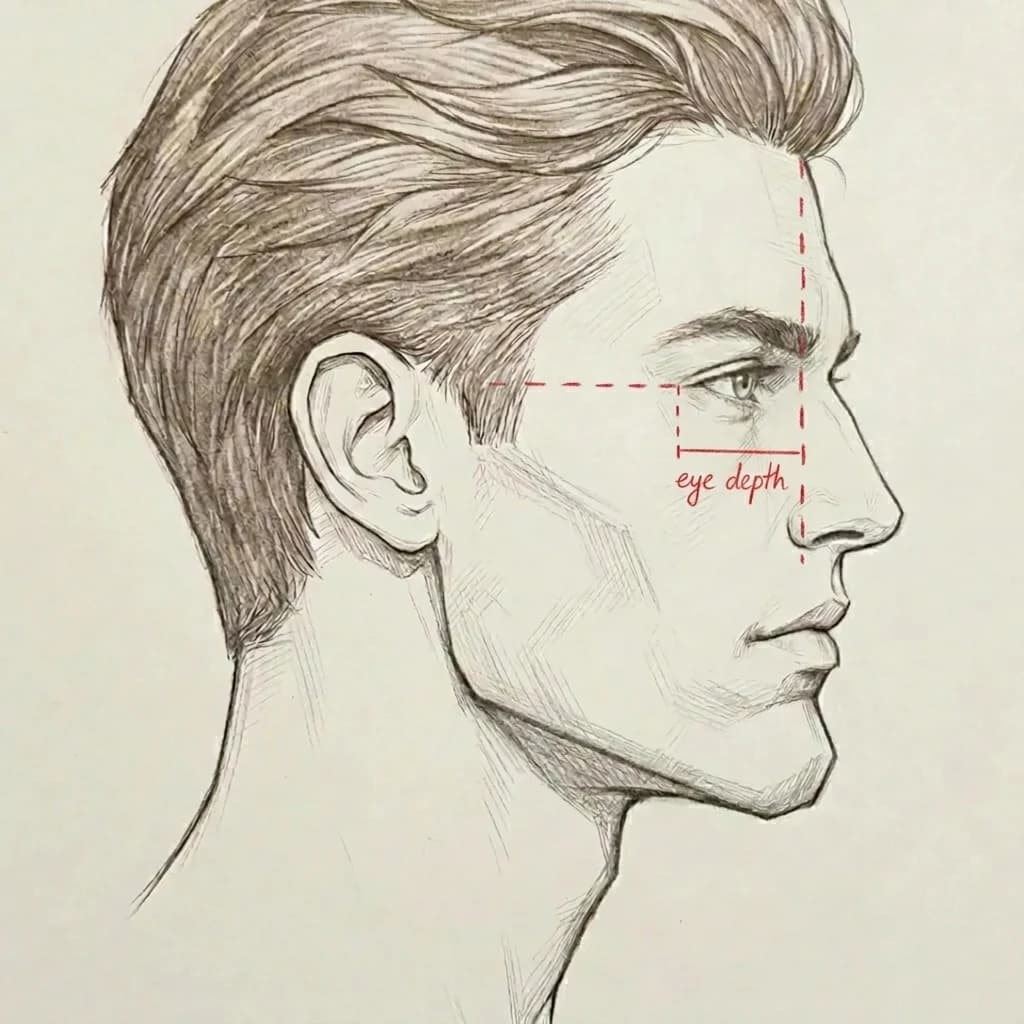
Eye and brow bone are in standard alignment. The brow doesn't stick out much further forward than the eye. No shadow over the eye area. The most common pattern.
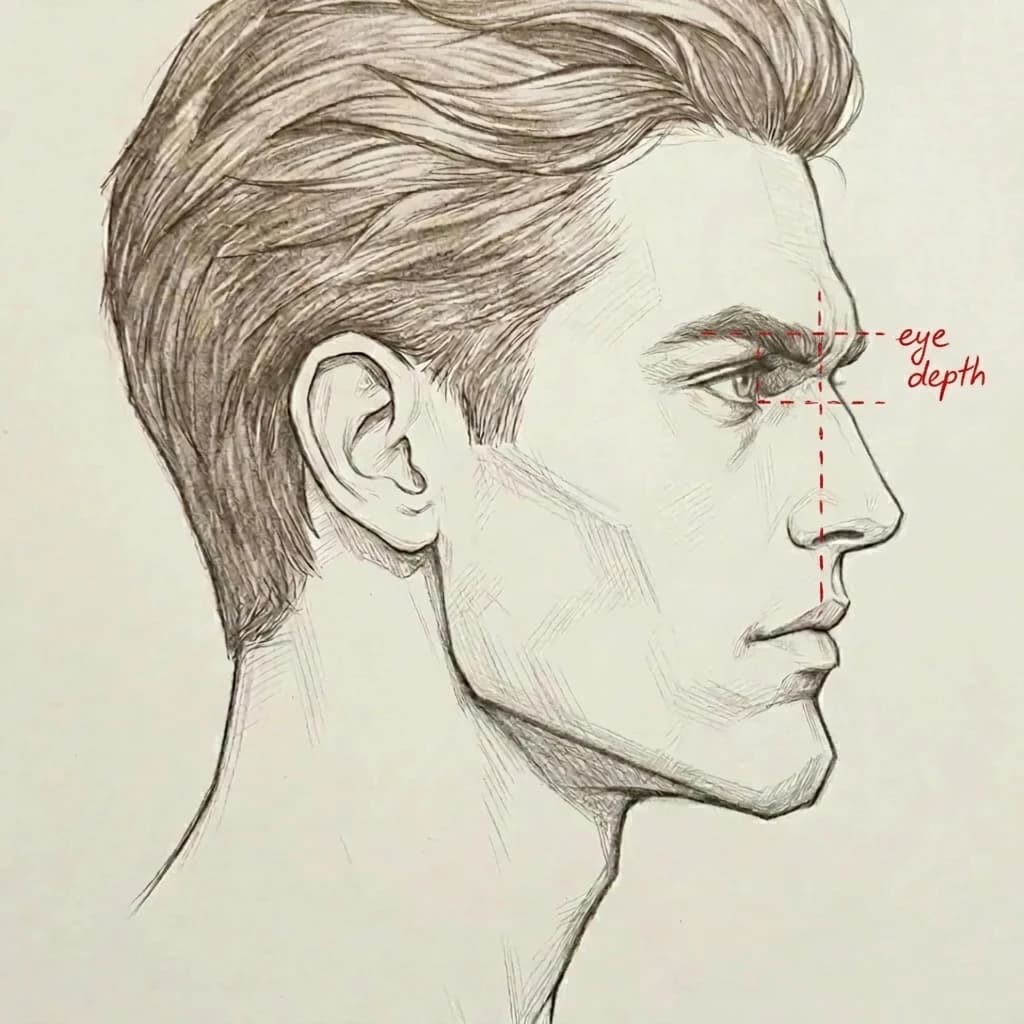
Strong brow bone projects forward, eye sits clearly recessed behind it. Visible shadow over the eye area. The looksmax-favorable version — present from youth, not aged-looking.
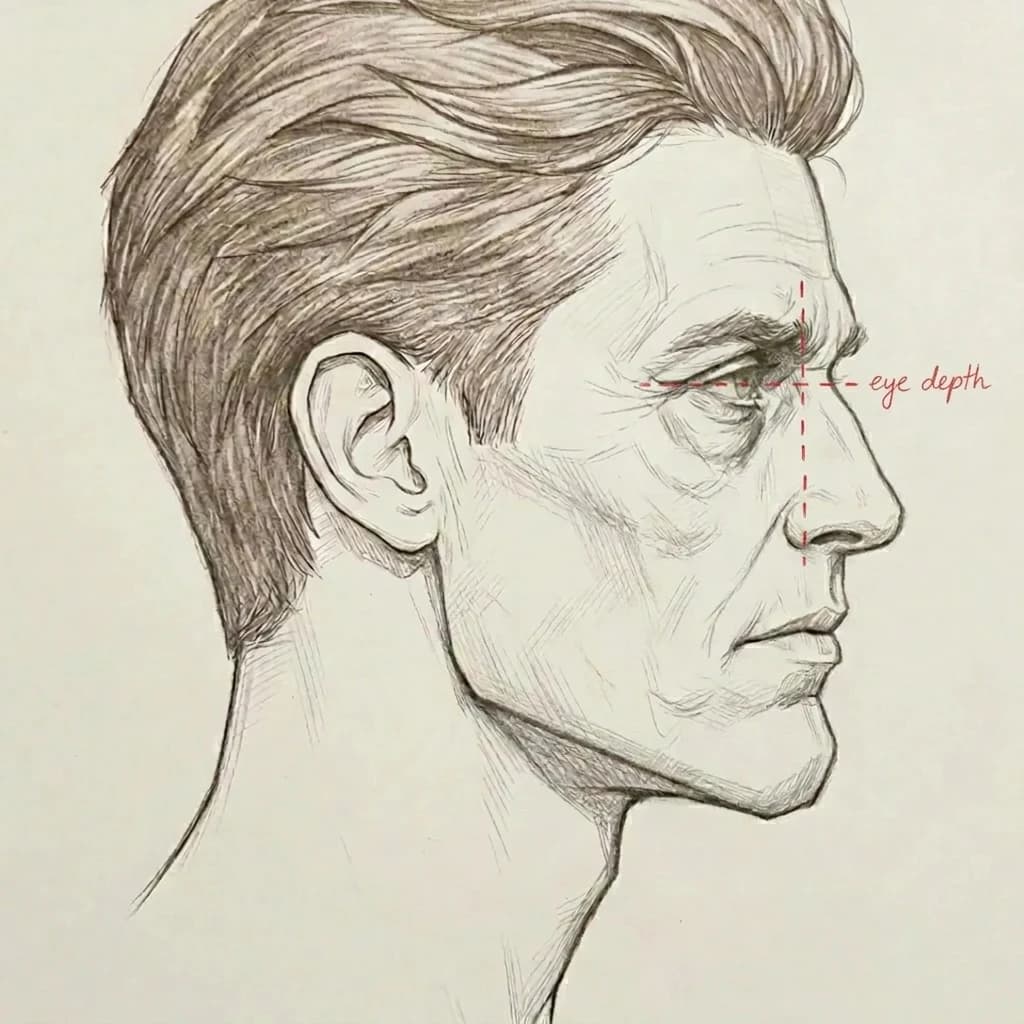
Looks similar to deep-set but the cause is different — fat around the eye has shrunk and the bone has thinned with age. The brow bone is normal, but the surrounding tissue has hollowed. Reads as tired rather than intense.
Self-Assessment
Four checks. Three minutes. Free.
Side profile photo (most reliable)
Take a strict side-profile photo at eye level. Look at how your eye sits relative to your brow bone. In deep-set eyes, the brow bone clearly sticks out further forward than the eye — your eye sits visibly back behind it. In normal-set eyes, the brow and eye line up more vertically.
Front photo — shadow under the brow
Take a front-facing photo with even lighting. Look at the area between your brow and upper lid. Deep-set eyes have a visible shadow under the brow — the brow bone acts like an awning over the eye. You can still see your lid space (this is what makes it different from hooded eyes), but the eye itself sits in shadow.
Overhead light test
Stand under a single overhead light with a mirror in front of you. If your forehead casts a clear shadow over your eyes — making them look darkened from above — you have deep-set eyes. The brow bone is doing the work.
Make sure it's not hooding or age-related hollowing
Hooded eyes have skin draping down OVER the lid — the lid space disappears. Deep-set eyes have the eye sitting BACK in the skull — the lid space is still visible, the eye just sits further behind your brow. Age-related hollowing looks similar to deep-set but is different: it develops slowly as you age (loss of fat around the eye) and reads as tired, not intense. The key tell: if you've had it since you were young, it's structural deep-set. If it appeared gradually, it's hollowing.
Our free Hunter Eyes Test scores socket depth as one of 5 components from a single photo, alongside canthal tilt, lid exposure, almond shape, and brow distance. 0-100 hunter score with 5-tier verdict.
Are Deep Set Eyes Attractive?
Generally yes, for both sexes. Here's the cultural and structural breakdown.
Masculine, dominant, intense
Pairs with the hunter eyes aesthetic — adds the structural shadow that conveys focus and high status. Component #3 of our 5-component hunter eyes scoring. Looksmax community treats deep-set as straight-up favorable.
Frequently cited: Robert Pattinson, Adam Driver, Cillian Murphy, Ben Affleck, Bradley Cooper, Tom Hardy.
Mysterious, smoky, intense
The structural shadow gives a dramatic eye-area read other eye shapes need eyeshadow to fake. Generally rated as attractive — adds depth and intensity.
Frequently cited: Angelina Jolie, Cate Blanchett, Keira Knightley, Blake Lively, Emma Stone.
Honest research caveat
Research specifically on whether deep-set eyes are attractive is limited. The "deep-set eyes are attractive" idea comes mostly from cultural perception and looksmax community consensus rather than formal studies. The studies that exist look at the eye area broadly but don't isolate socket depth as a single variable. Treat the favorable framing as "commonly perceived" rather than "proven by science."
What Causes Deep Set Eyes?
Two mechanisms. Both look similar but have different aesthetic reads.
1. Genetics / inherited bone structure
structural — attractiveThe main cause of true deep-set eyes. How deep your eye socket is and how far your brow bone sticks out are mostly inherited — they're set during skeletal growth and don't change. They cluster with other inherited eye-area features (canthal tilt, brow position, eye spacing). This is the version that looks intense and attractive in looksmax communities.
2. Age-related hollowing
acquired — reads tiredAs you age, fat around your eye area shrinks and the bone of your eye socket slowly thins. This makes your eyes look sunken — similar to deep-set, but it reads differently because it developed gradually instead of being there since youth. Often comes with tear-trough hollowness and dark circles. Reads as tired rather than intense. The fix goes in the opposite direction — restore volume with filler or fat grafting, not lean into the hollowness.
Makeup & Styling
Reverse the standard rules. The structural shadow is already doing the work.
- →Lid: light or shimmery — pushes the lid forward optically, opens up the recessed eye area.
- →Avoid deep crease shadow — the crease is already in shadow naturally; darkening it intensifies the recession unflatteringly.
- →Contour shade goes under the brow bone, not in the natural crease.
- →Dark shades only at the outer corner for definition.
- →Define the brow well — it's the structural anchor of the deep-set look.
- →Don't fight it — deep-set is favorable. Lean into it.
- →Brow density reinforces the supraorbital ridge prominence. Don't over-pluck.
- →Body fat reduction sharpens the surrounding orbital structure and amplifies the deep-set look.
- →Sleep + hydration prevents the under-eye area from darkening, which can push the look from "intense" toward "tired."
- →Score the rest of your eye area — deep-set is one of 5 hunter-eyes components.
When Deep-Set Eyes Can Read Unflattering
Deep-set itself is generally favorable, but two contributors can flip the read from "intense" to "tired":
- →Excessive depth — past a certain point, deep starts reading hollow.
- →Tear trough hollowness or dark circles — the recessed eye area amplifies undereye fatigue. Skin care, sleep, hydration, and (in moderate cases) tear trough filler reverse this without changing the deep-set itself.
Fix isn't to change the deep-set — it's to address the surrounding tissue.
Score Your Whole Eye Area
Socket depth is one of 5 components in our Hunter Eyes Test. Free, 60-second AI scoring across canthal tilt, lid exposure, socket depth, almond ratio, and brow distance — with a 0-100 hunter score and 5-tier verdict.
FAQ
What are deep set eyes?+
Eyes that sit further back in your skull than usual, paired with a brow bone that sticks out forward. The brow bone creates a 'shelf' that casts a shadow over your upper lid and makes your gaze look more intense. The eye itself sits recessed behind the brow. Deep-set is a structural thing you're born with — different from age-related hollowing (which develops slowly as you age) and different from hooded eyes (which is skin draping over the lid).
Are deep set eyes attractive?+
Generally yes, for both men and women. For men, deep-set eyes look masculine, dominant, and intense — they pair naturally with the hunter-eyes look (and they're component #3 in our 5-component Hunter Eyes Test). For women, deep-set eyes look 'mysterious' or 'smoky' — they get a dramatic shadow effect that other eye shapes need eyeshadow to fake. One caveat: a moderate depth is what works best. Going too extreme can start to look sunken. Honest note: research specifically on deep-set attractiveness is limited — the positive perception is more cultural than proven by studies.
Deep set eyes vs hooded eyes — what's the difference?+
Two different features that often go together. Deep-set = your eye sits further back in your skull (the brow bone sticks out forward, lid space is still visible but in shadow). Hooded = extra skin from the brow bone draping over the lid (the lid crease is hidden under the skin). Many faces have BOTH — that combo is the looksmax-ideal hunter eyes look. Quick test: if you can see your lid space but the eye is in shadow, that's deep-set. If your lid is hidden under skin, that's hooded.
What causes deep set eyes?+
Two different things can cause the look: (1) Genetics / inherited bone structure — the main cause for true deep-set. You're born with deeper eye sockets and a more prominent brow bone. Set during skeletal growth, present from youth. This is the 'attractive' version. (2) Age-related hollowing — as you age, fat around your eye area shrinks and the eye socket bone slowly thins. This produces a sunken look that resembles deep-set but reads as tired or aged rather than intense.
What celebrities have deep set eyes?+
Frequently cited examples — men: Robert Pattinson, Adam Driver, Cillian Murphy, Ben Affleck, Bradley Cooper, Tom Hardy. Women: Angelina Jolie (most consistent citation), Cate Blanchett, Keira Knightley, Blake Lively, Emma Stone. The list spans different overall face types and beauty archetypes — proving deep-set is generally a positive feature regardless of the rest of your face.
What's the best makeup for deep set eyes?+
Reverse the standard rules. Most eyeshadow tutorials darken the crease — but deep-set eyes already have the crease in natural shadow, so darkening it just makes the recession look more extreme. Instead: keep your lid LIGHT or shimmery (this pushes the lid forward visually), use dark shades only in the outer corner, and put your contour shade UNDER the brow bone rather than in the crease. Define your brows well — they're what frame the deep-set look. For looksmax men: don't try to fix deep-set with makeup. It's a feature, not a flaw.
Can you get deep set eyes without surgery?+
Mostly no — they're a bone structure thing. Lowering your body fat can reduce puffiness around your eyes and make existing deep-set look a bit more pronounced, but you can't actually push your eyes further back in your skull. Brow grooming and density help — fuller brows make the brow bone look more prominent. For the sunken / hollow look from aging, hyaluronic acid filler can RESTORE volume — but that's the opposite direction, not deepening normal-set eyes.
Are deep set eyes part of hunter eyes?+
Yes — having deep-set eyes is component #3 of our 5-component Hunter Eyes Test, alongside positive canthal tilt, hooding (low lid exposure), almond eye shape, and a low brow-to-eye distance. Hunter eyes is the COMBINATION of all five — deep-set alone doesn't equal hunter eyes, but it's a strong piece. Take our free Hunter Eyes Test for a full 5-component score from a single photo.
Are sunken eyes the same as deep set eyes?+
No — they look similar but they're different things. Sunken eyes are caused by aging or weight loss (fat around your eye shrinks, bone of the socket thins). They develop slowly, come with dark circles and tear-trough hollows, and read as tired or unwell. Deep-set eyes are something you're born with — caused by genetics and bone structure, present from youth, and they read as intense and attractive. The difference is whether you've always had it (structural) or it developed gradually (acquired).
Can deep set eyes look bad?+
Rarely from the deep-set itself — but two things can make it look unflattering: (1) Going too extreme — past a certain point, deep starts reading hollow. (2) Combined with dark circles or hollow tear troughs underneath, the whole eye area can look tired. The fix isn't changing the deep-set — it's addressing the skin around your eyes (sleep, hydration, skin care, filler in severe cases).
Sources
- How to Tell if You Have Deep-Set Eyes — NVISION — Top-ranking general-audience reference
- Brow Ridge — Wikipedia — Anatomical structure of the supraorbital ridge
- Periorbital anatomy — NIH PMC — Hills and valleys of periorbital structure
- Orbital fat loss / sunken eyes — HealixaHealth — Age-related hollowing distinction
- Exophthalmos / proptosis — StatPearls / NIH — The opposite condition (protruding eyes) clinical reference
- Eye/eyebrow attractiveness research — PMC — Periorbital attractiveness research baseline
- Tear trough filler — PMC — Hyaluronic acid for orbital hollowing